Cerebrella Home

Category

Neuroscience

5 articles

Two Languages, One Stronger Brain: The Neuroscience of Bilingualism and Lifelong Cognitive Resilience

Two Languages, One Stronger Brain: The Neuroscience of Bilingualism and Lifelong Cognitive Resilience

Acquiring a second language does far more than expand your vocabulary—it physically reshapes the architecture of your brain. Neuroimaging research reveals that bilingual individuals develop denser gray matter, more robust executive function networks, and a measurable buffer against age-related cognitive decline. Whether you are a lifelong monolingual or a lapsed high school Spanish student, the science of language learning holds powerful implications for brain optimization at any age.


Stolen Focus: The Neuroscience of What Constant Notifications Are Doing to Your Attentional Circuits

Stolen Focus: The Neuroscience of What Constant Notifications Are Doing to Your Attentional Circuits

Every ping, buzz, and banner alert carries a hidden cognitive price tag that accumulates silently over time. Neuroscientists are now mapping exactly how digital interruption reshapes the brain's focus infrastructure at the cellular level. Understanding these mechanisms—not just the symptoms—is the first step toward reclaiming sustained attention in a notification-saturated world.

The Neuroscience of Doing Nothing: Why an Idle Brain Is a Productive One

The Neuroscience of Doing Nothing: Why an Idle Brain Is a Productive One

Modern life has engineered boredom almost entirely out of existence—and neuroscientists argue that is a serious problem. When the brain is never allowed to idle, a critical neural network responsible for creativity, self-reflection, and memory consolidation loses its opportunity to function. Understanding what happens inside the brain during periods of mental quiet may be the most compelling argument yet for putting down your phone.

Beyond the Bedroom: The Neuroscience of Full-Spectrum Brain Recovery

Beyond the Bedroom: The Neuroscience of Full-Spectrum Brain Recovery

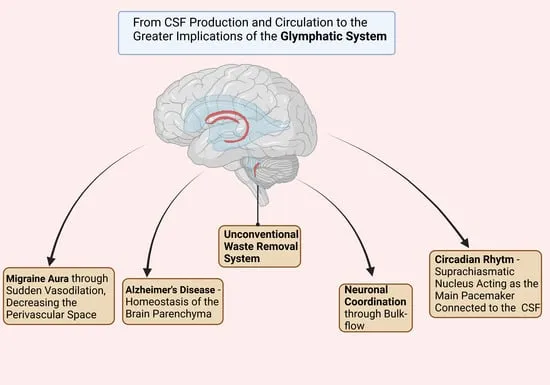
Sleep is essential, but neuroscientists increasingly recognize that what happens during waking hours matters just as much for cognitive restoration. From glymphatic drainage windows to strategic caffeine protocols, the science of brain recovery extends far beyond a good night's rest. Here is what the research—and the researchers themselves—actually do to keep their minds performing at peak capacity.

The Brain's Hidden Conductor: How the Cerebellum Quietly Orchestrates Learning, Memory, and Thought

The Brain's Hidden Conductor: How the Cerebellum Quietly Orchestrates Learning, Memory, and Thought

Long dismissed as a simple motor coordinator, the cerebellum is now recognized by researchers as a sophisticated hub for memory formation, cognitive timing, and mental flexibility. Emerging neuroscience is reshaping our understanding of this compact but powerful brain structure. Discover what the latest research reveals—and how you can put these findings to work for a sharper mind.