The Brain's Hidden Conductor: How the Cerebellum Quietly Orchestrates Learning, Memory, and Thought
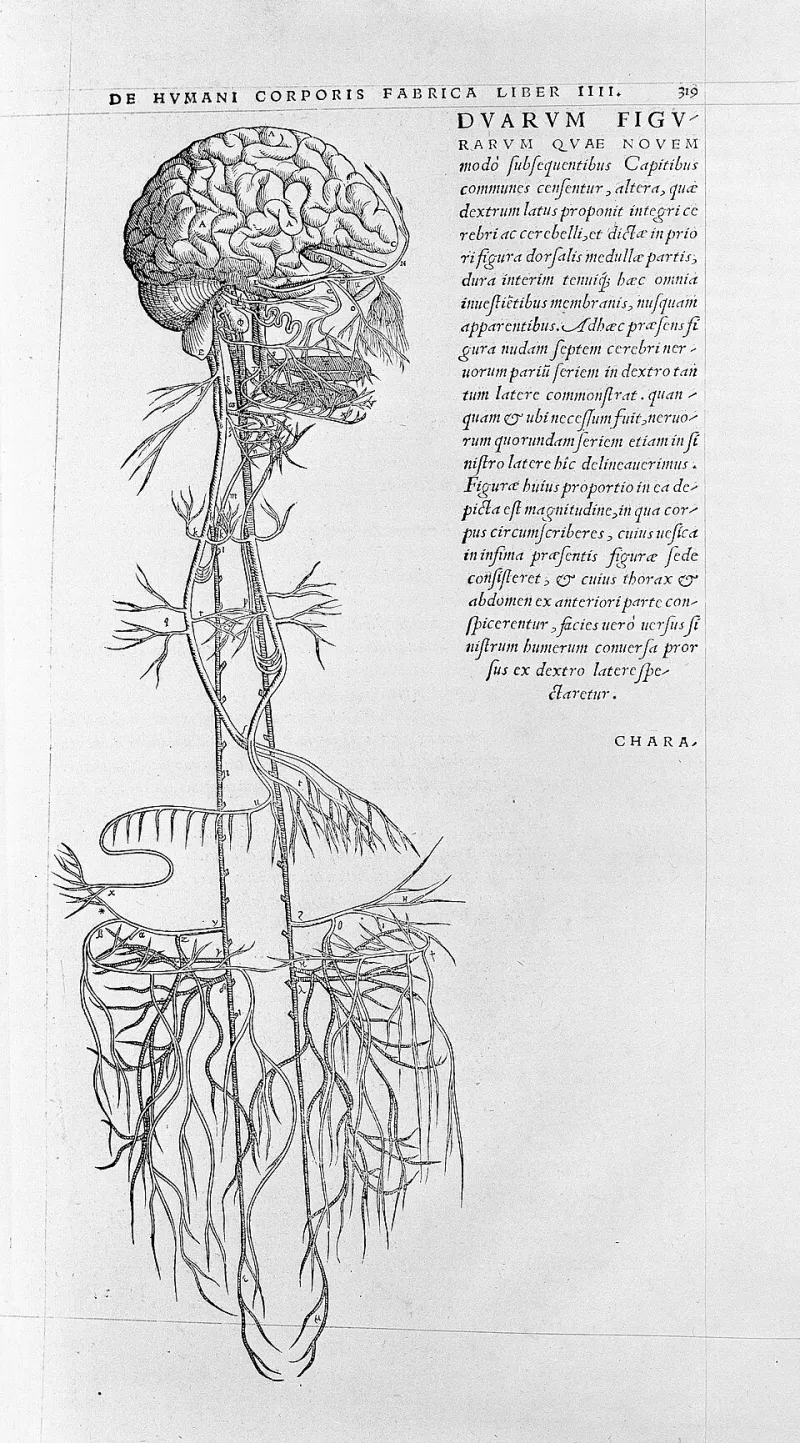
Photo: Unknown, CC BY 4.0, via Wikimedia Commons
More Than a Balance Beam
Mention the cerebellum to most people, and they will picture an athlete on a balance beam or a toddler learning to walk. That association is understandable: for most of the twentieth century, neuroscientists categorized this dense, cauliflower-shaped structure at the base of the skull almost exclusively as a motor control center. Its job, the textbooks said, was to fine-tune movement and keep the body upright.
That characterization was not wrong—it was simply incomplete. Over the past two decades, a growing body of neuroimaging studies, lesion analyses, and computational modeling has revealed that the cerebellum is far more than a coordinator of physical motion. It is, in many respects, a hidden conductor of the brain's cognitive orchestra, quietly shaping how quickly we learn new skills, how reliably we retain memories, and how fluidly we shift between competing ideas.
Understanding this expanded role has practical implications for every American seeking to protect and enhance their cognitive health, regardless of age or background.
A Structure Built for Precision Timing
The cerebellum contains roughly 69 billion neurons—more than all other brain regions combined—yet it accounts for only about 10 percent of total brain volume. This extraordinary cellular density is not accidental. The cerebellum is, at its core, a timing machine. Its Purkinje cells and granule cells form intricate feedback loops that allow the brain to predict the precise moment an action—or a thought—should unfold.
This predictive timing function turns out to be as relevant to cognition as it is to catching a baseball. When you read a sentence, follow a conversation, or solve an arithmetic problem, your brain must sequence information in real time. Disruptions to cerebellar timing, researchers have found, can impair these processes in measurable ways.
A landmark study published in Neuron demonstrated that patients with cerebellar damage exhibited not only motor deficits but also significant impairments in procedural learning—the type of learning that allows a person to internalize a skill until it becomes automatic. Procedural learning underlies everything from typing to playing a musical instrument to executing a well-practiced argument in a debate.
The Cerebellum and Memory Formation
The relationship between the cerebellum and memory is among the most compelling frontiers in cognitive neuroscience. Classical conditioning research—particularly studies involving the eyeblink reflex—established decades ago that the cerebellum is essential for associative learning, the process by which the brain links a neutral stimulus to a meaningful outcome.
More recent functional MRI research has extended this understanding considerably. Scientists at the National Institutes of Health and several major U.S. universities have observed robust cerebellar activation during working memory tasks, language processing, and even certain forms of emotional memory encoding. The cerebellum, it appears, communicates bidirectionally with the prefrontal cortex and hippocampus—two structures long considered the primary architects of memory—through well-defined neural pathways called cerebrocerebellar loops.
This connectivity means that a well-functioning cerebellum may amplify the efficiency of memory consolidation, while a sluggish or damaged one may quietly undermine it.
Cognitive Flexibility and Decision-Making
One of the most surprising discoveries in recent cerebellar research concerns cognitive flexibility—the ability to abandon an outdated strategy and adopt a better one. This executive function, traditionally attributed almost entirely to the frontal lobes, appears to depend on cerebellar input as well.
A 2021 study from researchers at MIT found that disrupting cerebellar activity in animal models significantly impaired the subjects' ability to switch behavioral strategies in response to changing reward conditions. Human neuroimaging studies have reported analogous findings: individuals with greater cerebellar gray matter volume tend to perform better on tasks requiring rapid cognitive switching.
For the health-conscious reader, this research carries an important message. The decisions you make every day—from evaluating competing health claims to navigating complex professional scenarios—may be subtly influenced by the functional state of a brain region you have likely never considered optimizing.
Practical Strategies to Support Cerebellar Health
The good news is that the cerebellum is highly trainable. Because it is fundamentally a learning and prediction engine, it responds robustly to novel, coordinated challenges. The following evidence-informed strategies are worth incorporating into a brain health routine.
Dual-task physical training. Activities that combine movement with cognitive demands—such as learning a new dance style, practicing tai chi, or playing a sport that requires rapid tactical decisions—engage the cerebellum far more intensively than simple aerobic exercise. A 2020 trial published in Frontiers in Aging Neuroscience found that older adults who participated in coordinated dance training showed greater improvements in processing speed than those who walked for equivalent durations.
Musical practice. Learning an instrument is one of the most potent cerebellar stimulants known to neuroscience. Even beginning adult learners demonstrate measurable changes in cerebellar structure after consistent practice, according to longitudinal MRI studies. Even modest daily engagement—fifteen to twenty minutes of focused practice—appears beneficial.
Precision motor skills. Activities requiring fine motor coordination, such as calligraphy, woodworking, or juggling, generate the kind of error-correction feedback that the cerebellum uses to refine its internal models. The deliberate, iterative nature of skill acquisition is precisely the signal this structure needs to adapt.
Adequate sleep. The cerebellum consolidates motor and procedural memories during sleep, particularly during slow-wave stages. Chronic sleep restriction disrupts this consolidation process, effectively erasing the learning gains accumulated during waking hours. Prioritizing seven to nine hours of quality sleep is not merely good general advice—it is a targeted cerebellar intervention.
Omega-3 fatty acids. Docosahexaenoic acid (DHA), found abundantly in fatty fish such as salmon and sardines, is a critical structural component of cerebellar neurons. Research from the University of California, San Diego has linked higher DHA status to greater cerebellar volume and improved motor learning outcomes. For those who do not consume fish regularly, high-quality algae-based DHA supplements represent a practical alternative.
Rethinking the Brain's Supporting Cast
The cerebellum's story is, in many ways, a parable about scientific humility. For generations, researchers focused their cognitive neuroscience efforts on the cortex and hippocampus, treating the cerebellum as a competent but unremarkable supporting player. The past two decades have forced a significant revision of that view.
What this means for anyone committed to lifelong cognitive vitality is both clarifying and empowering. Optimizing brain health is not solely about protecting the prefrontal cortex or preserving hippocampal volume. It requires attending to the entire neural ecosystem—including the remarkable structure quietly processing information at the base of your skull, timing every thought you have ever had.
The cerebellum has been doing its work without recognition for long enough. It is time to give it the attention—and the training—it deserves.