Micro-Awe: How Brief Encounters With Wonder Ease Stress and Strengthen Memory
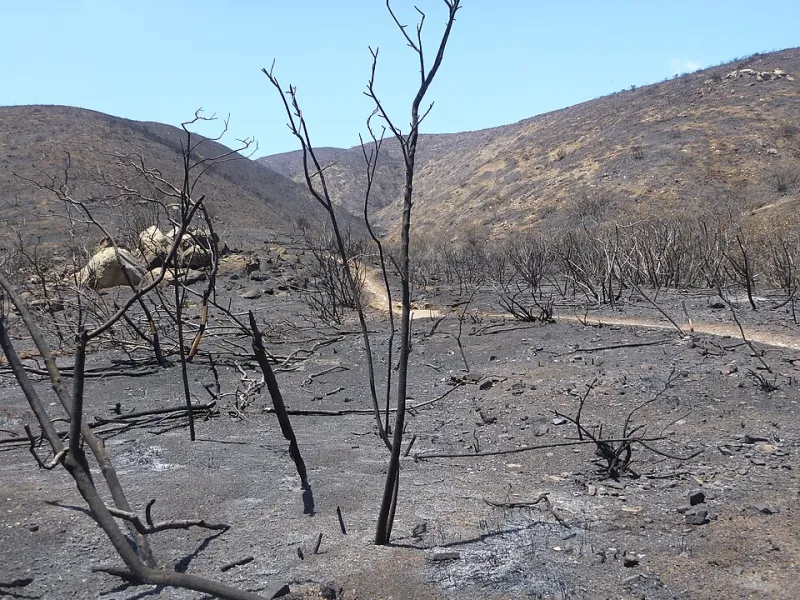
Photo: Santa Monica Mountains National Recreation Area, Public domain, via Wikimedia Commons
Wonder is often marketed as a destination. It is supposed to require a canyon, a cathedral, or a passport. That framing is memorable, but it is also costly: it implies that awe belongs to vacations and not to ordinary Tuesdays. A growing body of psychological and neuroscience research points in a more practical direction. Brief encounters with something vast, beautiful, or difficult to fully explain can shift attention, reduce self-focused rumination, and create better conditions for learning and memory.
The useful phrase here is micro-awe. It refers to small, genuine moments of wonder that last less than a few minutes and do not require a special itinerary. A commute past a public mural, a lunch break beneath a mature oak, a few minutes with a favorite recording, or a clear night sky above a parking lot can all supply the raw material. The effects are not magical, and they are not a substitute for clinical care. But they are real enough to merit attention—especially for people whose days are dense with alerts, deadlines, and self-monitoring.
What Awe Does in the Brain
Psychologists commonly describe awe as arising when a person encounters something perceived as vast that exceeds existing mental categories. The encounter demands what researchers call accommodation: the mind must stretch, even slightly, to take it in. That stretch can be spatial, as with a mountain range; temporal, as with an ancient tree; or conceptual, as with a piece of music that seems to reorganize the listener's sense of time.
Neuroimaging work has linked awe to reduced activity in the default mode network, a set of brain regions associated with self-referential thought and rumination. This does not mean that awe switches off the self. It means that attention is pulled outward, away from the loop of rehearsal and self-assessment that often dominates a stressful day. Participants in awe-inducing experiments sometimes report a sense of smallness—not in a diminishing way, but in a way that resizes the problem they were carrying.
Awe also appears to influence the autonomic nervous system. Some studies have found shifts toward parasympathetic activity, the branch associated with recovery and calm. The evidence is not uniform, and individual responses vary. People who are exhausted, grieving, or prone to dissociation may not experience wonder as pleasant. For them, a vast landscape can feel overwhelming rather than restorative. That variability matters. Awe is not a universal prescription; it is a state that depends on context, safety, and temperament.
Memory, Attention, and the Small-Self Effect
The memory connection is indirect but plausible. Memory encoding depends heavily on attention. When attention is captured by something that feels significant, the brain is more likely to process details deeply rather than skim them. Awe tends to capture attention in exactly this way: it interrupts ordinary prediction and makes the present moment feel more salient.
Some experiments have found that awe can improve recall for central details of a narrative or an experience, though the effect is not universal and does not mean that every awe-filled afternoon will produce a photographic memory. The more reliable claim is that awe changes the conditions under which memory forms. It reduces rumination, widens attention, and increases the likelihood that a person will notice rather than merely pass through an environment. For anyone trying to learn or retain information, those are useful conditions.
There is also a social dimension. Awe can increase feelings of connection and reduce the sense that one is the center of the story. That shift may help explain why brief wonder sometimes makes a problem feel more workable. The problem has not changed, but the frame around it has.
Designing an Awe Pause
An awe pause is not a productivity technique, and it should not be measured like one. The goal is not to harvest awe for output. The goal is to give attention a wider frame for a minute or two, then return to the day without turning the experience into content.
A few principles make the pause more likely to work.
First, choose a threshold rather than a task. Step outside, walk to a window, or stand in front of a piece of art without opening a feed. The transition matters because it interrupts the momentum of ordinary attention.
Second, look longer than feels efficient. Sixty to ninety seconds is often enough. Most people underestimate how quickly they scan and label an environment. A slower look allows the mind to move past recognition and into notice.
Third, remove the camera for a moment. Documentation is not the same as attention. A photograph can be taken after the pause, but the pause itself is better served by unaided looking or listening.
Fourth, let the feeling be small. Micro-awe does not need to produce tears or a life-changing insight. A slight sense of expansion, a quiet intake of breath, or a momentary loss of self-consciousness is sufficient. The mistake is to demand a peak experience and then conclude that wonder is unavailable.
Finally, do not turn the pause into a habit tracker. The moment awe becomes another item on a self-optimization list, it begins to resemble the stress it was meant to interrupt. A better approach is to leave a few openings in the day and let wonder occur when it occurs.
The Difference Between Awe and Another Optimization
At Cerebrella, the interest is not in turning wonder into a performance metric. The brain does not need another dashboard. It needs periods in which attention is not being constantly recruited for evaluation, comparison, and self-correction. Awe is valuable partly because it is not about the self. It is about something else—a sky, a piece of music, a structure, a pattern—and that outward turn is the point.
This distinction is especially relevant in the United States, where wellness advice is often packaged as a competitive advantage. Awe is not a supplement. It is not a hack. It is a basic human capacity that becomes harder to access when every minute is scheduled and every experience is assessed for its return. Small doses of wonder do not require a new identity. They require a little unclaimed attention.
A Gentle Caveat
Awe is not a treatment for anxiety, depression, or trauma. For some people, expansive experiences can intensify distress rather than relieve it. If a pause feels destabilizing, it should be shortened or skipped. The science supports brief wonder as one modest contributor to brain health, not as a replacement for sleep, social connection, movement, or professional care.
Still, the modest claim is worth taking seriously. A day does not need a canyon to be less narrow. Sometimes a tree, a song, or a few minutes of clear sky is enough to interrupt the loop—and to give the brain a better chance to remember what matters.